Learn Greek with Rosetta Stone
GET STARTEDHave you ever dreamed of reading Homer, Aristotle, or contemporary Greek writers in the original? You’re not alone. Millions around the world study Greek—drawn by its history, culture, and modern relevance. From Athens to Thessaloniki to the islands of the Aegean, Greek connects people, traditions, and ideas.
Still, getting started can feel intimidating. The alphabet is new, the sounds are unique, and the history is vast. But here’s the good news: learning Greek is both rewarding and achievable. With the right approach, you’ll see steady progress and open the door to one of the world’s most fascinating languages.
Why learn Greek?
Mastering a second language offers countless benefits, and Greek stands out for its rich heritage and modern utility. Whether your goal is personal discovery, career development, or cultural immersion, Greek can help you get there.
Top reasons to learn Greek
- Advance your career: Greek can be an asset in fields like archaeology, history, theology, and Mediterranean business.
- Sharpen your mind: Learning a new alphabet and grammar structure strengthens memory, problem-solving, and adaptability.
- Appreciate culture authentically: Understand Greek music, films, and literature in their original language.
- Enhance your travels: Communicate with locals and explore Greece with more confidence and connection.
- Family and friends: Preserve heritage, connect with relatives, or build new friendships with Greek speakers.
- Live abroad with confidence: If you plan to study, work, or retire in Greece or Cyprus, the language is your gateway.
Greek language basics
Where is Greek spoken?
Greek is the official language of Greece and Cyprus, and it’s spoken by diaspora communities worldwide. With over 13 million speakers, it’s both a modern European language and a bridge to ancient traditions.
How long does it take to learn Greek?
Consistency is key. With just 15 minutes a day, you can begin to hold basic conversations within weeks. Fluency requires persistence, but Rosetta Stone gets you speaking from lesson one.

Greek proficiency: from beginner to advanced
Beginner
Focus on pronunciation and essentials:
Learning the alphabet
Greetings and introductions
Asking basic questions
Describing people and things
Intermediate
Build on the basics:
Learn past, present, and future tenses
Use prepositions and adverbs
Expand your vocabulary
Advanced
Refine your skills toward fluency:
Master idiomatic expressions
Understand complex moods like subjunctive
Study specialized vocabulary (e.g., academic, professional, or travel-related Greek)

Learn with Rosetta Stone Sapphire
Rosetta Stone’s language experts have designed a learning journey that balances structure with flexibility:
Core Greek language skills
Pronunciation tips
Greek has a consistent alphabet, but some letters and sounds can surprise learners:
The letter “r” (ρ):
Usually rolled or trilled slightly, giving words a lively rhythm. For example: ρόδο (ródo – rose).
Double consonants:
Often lengthened in speech for emphasis, though not always in modern pronunciation. For example: θάλασσα (thálassa – sea).
Vowel combinations:
Greek uses diphthongs that change sound depending on context. For example: αυ can sound like “av” in αυγό (avgó – egg), but like “af” in αυτός (aftós – he).
Accents (´):
The accent mark shows which syllable is stressed. For example: μάτι (máti – eye) vs. ματί (matí – nonsense).

Vocabulary and origins
Greek has influenced countless English words—like “democracy”, “philosophy”, and “theater”. At the same time, modern Greek vocabulary reflects centuries of cultural exchange. Many words feel familiar to English speakers, while others connect back to ancient roots.
Useful phrases
Start with essentials like:
Καλημέρα (Kaliméra – Good morning)
KaliméraΤι κάνεις; (Ti káneis? – How are you?)
Ti káneis?Αντίο (Antío – Goodbye)
Antío
Greek verbs
Greek verbs change form based on subject, tense, and mood. For example, “to speak” (μιλάω – miláo) becomes:
Μιλάω (Miláo – I speak)
Μιλάς (Milás – you speak)
Μίλησα (Mílesa – I spoke)
You’ll practice common verbs like έχω (écho – to have), είμαι (eímai – to be), and πηγαίνω (pigaíno – to go).
Nouns and gender
Greek nouns have three genders: masculine, feminine, and neuter. Articles and adjectives must match the noun’s gender and number.
Masculine: ο φίλος (o fílos – the friend)
Feminine: η πόλη (i póli – the city)
Neuter: το βιβλίο (to biblío – the book)
Understanding gender is key to building correct sentences.
Regional variations
While standard modern Greek is widely understood, variations in accent and vocabulary exist between regions (mainland vs islands, urban vs rural). These differences are minor, and speakers understand each other across Greece and Cyprus.
How to learn Greek
Online:
Learn anytime, anywhere with Rosetta Stone’s app and online platform. Sign up now!
- Classroom learning: Great for structured, group-based study.
Private tutoring:
Personalized feedback and fast progress. The best source for Greek tutors is Wyzant.
- Tandem partners: Practice with native speakers through exchange.
- Immersion: Living in Greece accelerates your learning dramatically.
Media and tools to support learning
Books:
Try dual-language stories or beginner-level novels.
- Podcasts & music: Listen to Greek pop, traditional music, or podcasts.
- TV & movies: Add subtitles and rewatch scenes for reinforcement.
Take the first step
Rosetta Stone offers a free first lesson to get you started. Whether you’re learning for travel, heritage, or personal growth, Greek is a language that connects the past and the present. And Rosetta Stone will be with you every step of the way.
GET STARTEDWhat’s included with your subscription

All-access subscription
Access to all 25 of our languages
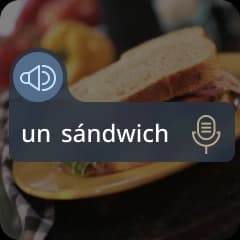
Immersive lessons
Master your new language with immersive lessons and our TruAccent speech tool

Chat Missions
Fun, realistic conversation practice with Chat Missions

Flashcards
500+ flashcard sets to learn the words you care about

Sapphire Studio
Create your own learning materials on any topic in Sapphire Studio
What our customers are saying

I absolutely love the approach that Rosetta Stone utilizes. It feels like a natural and fun way to learn a new language. I also appreciate that I’m able to squeeze lessons in when I only have 10 minutes… and it’s a more productive and enjoyable activity than getting sucked into online scrolling just to distract myself. Why not learn a new language instead?
― Turner
I have been using Rosetta Stone for over 30 years. By far, this is the best application for language learning. There are no language crutches, only immersion. You learn in a natural way and move forward quickly. Apps with games are fun, but you learn more slowly, and you are always “translating,” not immersing. Rosetta Stone makes language learning interesting and efficient.
― GrahamAbout Learning Greek with Rosetta Stone
On Rosetta Stone, learners begin Greek by exploring the alphabet, pronunciation, and essential vocabulary through interactive lessons. Listening and speaking exercises help learners recognize sounds and stress patterns, making it easier to read and pronounce words correctly. Grammar and vocabulary appear in meaningful contexts, allowing learners to absorb language naturally. Guided tutoring on the website gives learners opportunities to practice conversations and apply what they have learned in real situations.
Greek learning involves gradually building both comprehension and speaking ability. Learners often start with simple phrases and everyday expressions before expanding into more complex grammar and sentence structures. Exposure to Greek through music, videos, and podcasts strengthens understanding of rhythm, pronunciation, and cultural nuances. Repeated practice and consistent engagement help learners internalize patterns and communicate more confidently over time.
Practical application is key to mastering Greek. Reading aloud, practicing short conversations, or listening to native speakers during daily routines helps reinforce learning. When combined with the structured lessons, tutoring support, and pronunciation guidance available on the website, these activities promote steady, meaningful progress. Regular practice enables learners to navigate Greek-speaking environments with confidence and connect authentically with the culture.