Learn Polish with Rosetta Stone
GET STARTEDHave you ever dreamed of learning Polish? You're not alone. Millions around the world are drawn to the language — and for good reason. Polish offers rich cultural depth, expressive nuance, and a unique gateway to Central and Eastern Europe. From Warsaw to Kraków and beyond, it connects people, history, and communities.
Still, getting started can feel overwhelming. But here’s the good news: learning Polish is a deeply rewarding experience. With the right approach, you’ll soon see real progress.
Why learn Polish?
Mastering a second language offers countless benefits, and Polish stands out as one of the most practical and enriching options. Whether your goal is personal growth, career development, or cultural immersion, Polish can help you get there.
Top reasons to learn Polish
- Advance your career: Poland has a growing economy, and speaking Polish opens opportunities in business, technology, and international trade.
- Sharpen your mind: Learning Polish strengthens memory, problem-solving, and mental flexibility.
- Appreciate culture authentically: Access Polish literature, music, films, and traditions in their original language.
- Enhance your travels: Communicate more freely while exploring Poland and neighboring countries.
- Family and friends: Connect authentically with Polish-speaking relatives or friends.
- Live abroad with confidence: If you plan to study, work, or live in Poland, the language is your gateway.
Polish language basics
Where is Polish spoken?
Polish is the official language of Poland and spoken by over 45 million people worldwide, with significant communities in the U.S., U.K., and Canada.
How long does it take to learn Polish?
Consistency is key. Practicing just 15 minutes a day can help you hold basic conversations in weeks. Fluency takes time, but Rosetta Stone gets you speaking early and often.

Polish proficiency: from beginner to advanced
Beginner
Focus on pronunciation and essential grammar:
Greetings and introductions
Asking questions
Describing people and things
Using basic verbs like być (to be) and mieć (to have)
Intermediate
Build on the basics:
Learn various verb aspects (perfective vs. imperfective)
Explore prepositions and cases
Expand vocabulary
Advanced
Approach fluency by refining skills:
Master idiomatic expressions
Understand complex grammar, including cases and verb aspects
Study specialized vocabulary (for example, business or academic Polish)

Learn with Rosetta Stone Sapphire
Rosetta Stone’s language experts have designed a learning journey that balances structure with flexibility:
Core Polish language skills
Pronunciation tips
Polish pronunciation is mostly phonetic, but a few sounds can be tricky:
Consonant clusters:
Words like wszyscy (everyone) contain multiple consonants together. Practice slowly, then increase speed.
Soft vs. hard consonants:
ci in ciasto (cake) is soft, while k in kot (cat) is hard.
Nasal vowels:
ą and ę are pronounced through the nose, as in mąż (husband) or zęby (teeth).
Accented letters:
Polish letters with diacritics (ś, ź, ł, ń) are distinct sounds, essential for clarity. For example, ś in świeca (candle) and the ł in łódź (city of Łódź).

Vocabulary and origins
Polish is a Slavic language with roots in Old Church Slavonic. English speakers may find some familiar words, often borrowed from Latin, German, or French, such as hotel, restaurant, or telewizja (television).
Useful phrases
Begin with everyday expressions like:
Cześć (Hello)
CześćJak się masz? (How are you?)
Jak się masz?Do widzenia (Goodbye)
Do widzenia
Polish verbs
Polish verbs are conjugated based on tense, person, and aspect (perfective vs. imperfective). Start with common verbs like być (to be), mieć (to have), and robić (to do/make).
Nouns and gender
Every noun has a gender: masculine, feminine, or neuter. Gender affects articles, adjectives, and verb forms. For example: dobry kot (good cat, masculine) vs. dobra kawa (good coffee, feminine).
Regional variations
Polish is fairly standardized, but accents and some vocabulary vary between regions.
How to learn Polish
Online:
Learn anytime, anywhere with Rosetta Stone on your computer or mobile device. Sign up now!
- Classroom learning: Structured, interactive lessons.
Private tutoring:
Personalized feedback and rapid progress. The best source for Polish tutors is Wyzant, the nation’s largest network of tutors.
- Language exchange partners: Practice with native speakers.
- Immersion: Living in Poland accelerates learning dramatically.
Media and tools to support learning
Books:
Start with beginner-friendly stories or novels.
- Podcasts & music: Listen to natural speech patterns.
- TV & movies: Use subtitles to reinforce comprehension.
Take the first step
Rosetta Stone offers a free first lesson to help you get started. Whether you're learning for work, travel, or personal fulfillment, Polish is an excellent choice — and Rosetta Stone is here to guide you every step of the way.
GET STARTEDWhat’s included with your subscription
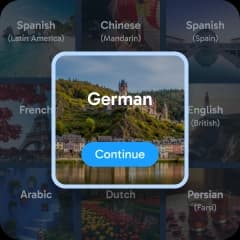
All-access subscription
Access to all 25 of our languages
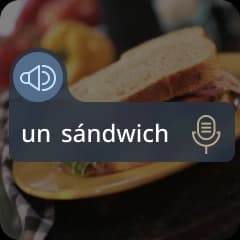
Immersive lessons
Master your new language with immersive lessons and our TruAccent speech tool

Chat Missions
Fun, realistic conversation practice with Chat Missions
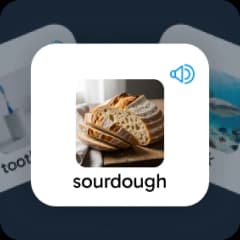
Flashcards
500+ flashcard sets to learn the words you care about
Sapphire Studio
Create your own learning materials on any topic in Sapphire Studio
What our customers are saying

I absolutely love the approach that Rosetta Stone utilizes. It feels like a natural and fun way to learn a new language. I also appreciate that I’m able to squeeze lessons in when I only have 10 minutes… and it’s a more productive and enjoyable activity than getting sucked into online scrolling just to distract myself. Why not learn a new language instead?
― Turner
I have been using Rosetta Stone for over 30 years. By far, this is the best application for language learning. There are no language crutches, only immersion. You learn in a natural way and move forward quickly. Apps with games are fun, but you learn more slowly, and you are always “translating,” not immersing. Rosetta Stone makes language learning interesting and efficient.
― GrahamAbout Learning Polish with Rosetta Stone
On Rosetta Stone, learners develop Polish skills through interactive lessons that introduce vocabulary, pronunciation, and essential grammar in context. Listening and speaking exercises help learners master challenging consonant clusters and the natural rhythm of the language. Grammar concepts, including cases and gender, are presented gradually within practical sentences, helping learners understand usage intuitively. Live tutoring on the website provides guided conversation practice, reinforcing skills learned on the website and building confidence in communication.
Learning Polish involves understanding its complex grammar system, including seven cases and noun genders, alongside core vocabulary and sentence structures. Many learners focus on everyday phrases and common expressions first, gradually expanding into more advanced constructions. Consistent exposure through repetition, as well as immersion in Polish media such as music, films, or podcasts, supports comprehension, pronunciation, and cultural understanding, making the language more accessible and memorable.
Learners can apply Polish skills by incorporating short, focused practice sessions into daily routines at home or while traveling. Practicing pronunciation aloud, reviewing key phrases, or engaging with Polish media helps reinforce grammar, vocabulary, and fluency. When paired with structured lessons and live tutoring available on the website, these habits support steady, practical progress. With regular practice, learners gain confidence to communicate effectively and connect with Polish-speaking communities and culture.